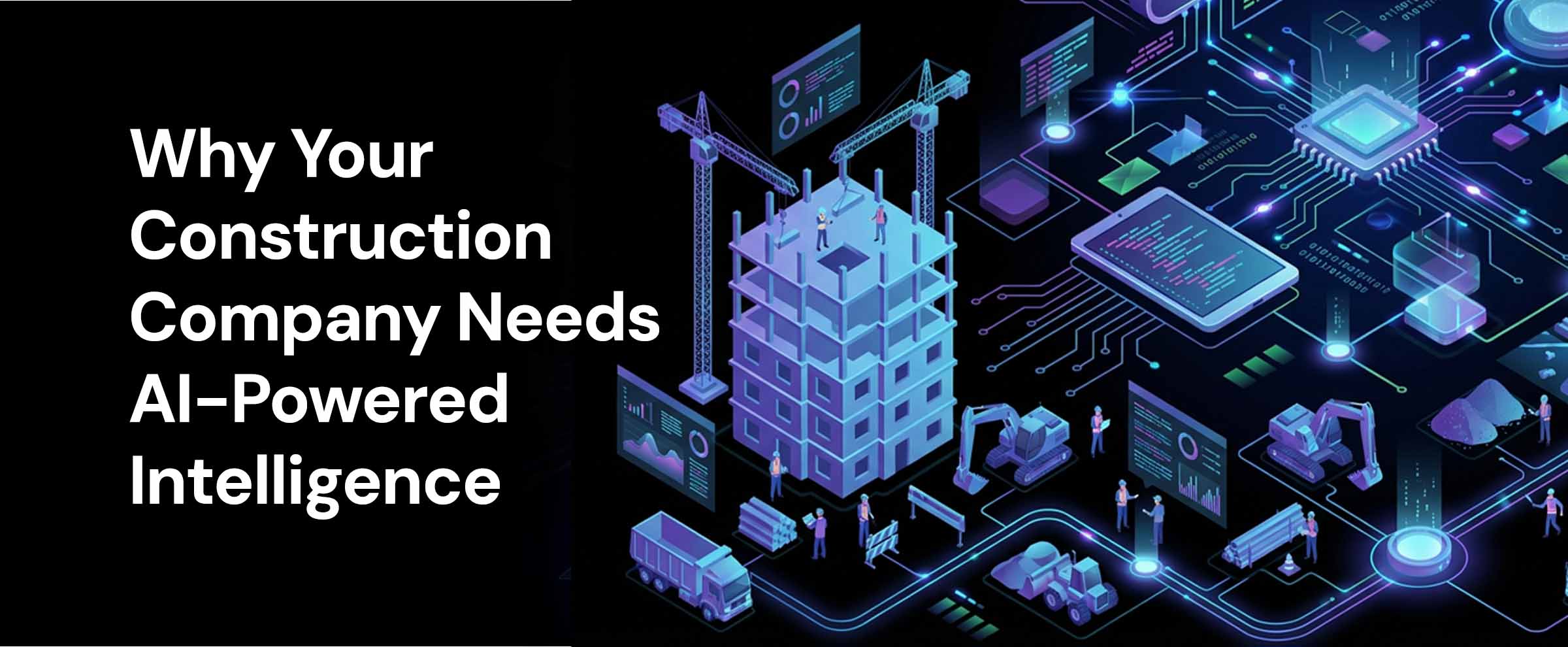
Even though construction will never become a “digital” field, the reality is that construction companies still generate a massive amount of data. Job costs, material prices, labor hours, equipment utilization, subcontractor invoices, change orders, the list goes on. Industry research shows that up to 96% of construction data goes unused, sitting as potential insights that could transform your business but never does.
Here’s the reality: you’ve got your hands full as it is between managing the job sites, the paperwork, and then of course the spreadsheets; juggling data from your accounting software, project management system, and field reports. By the time you manually compile everything, the information is already outdated. Meanwhile, your margins are getting squeezed—the average construction profit margin in 2024 sits between just 3-7%, leaving zero room for error.

That’s the problem AI-powered business intelligence solves for construction companies. And if you’re not using it yet, you’re competing at a serious disadvantage against contractors who are.
What Is AI-Powered Construction Business Intelligence?
Traditional business intelligence software (BI) for construction creates reports and dashboards. It shows you what happened last week or last month—things like project costs, hours worked, and budget vs. actual comparisons.
AI-powered construction BI goes further: it tells you WHY costs overran, WHICH jobs are heading for a thin margin before they’re complete, and WHERE you’re losing money across all your projects.
Let’s break it down by taking an example of the type of finding you might get when you run a report from each:
Traditional BI Software:
“The Riverside Commercial project is $47,000 over budget.”
AI-Powered Construction BI Software:
“The Riverside Commercial project is $47,000 over budget. Most of the overrun is materials: lumber bills on this job are running 23% above the estimate, and your electrical subcontractor has invoiced $14,200 more than the original quote. There’s also an email from your concrete supplier offering a 14-day price lock on the remaining pour.”
The difference is clear; AI doesn’t just report numbers—it connects the dots across all your data so you can decide what to do next.
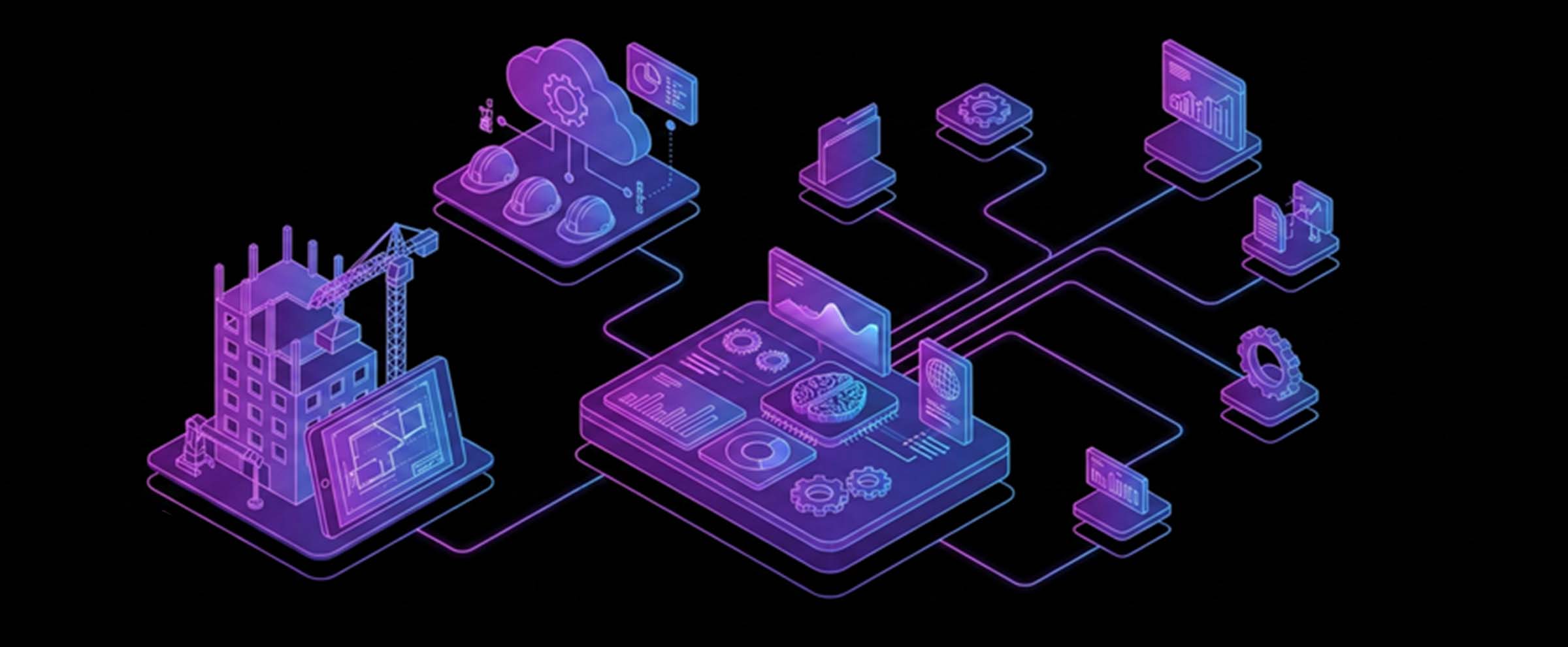
Critical Benefits of AI-Powered Construction BI
1. Make Decisions in Hours, Not Days
Without AI, creating a comprehensive project performance report can look like this:
- Export job costing data from your construction software
- Pull time cards and labor reports
- Download material invoices and receipts
- Check subcontractor billing status
- Compare to original estimates in Excel
- Manually calculate equipment costs
- Try to figure out which jobs are actually profitable
- Make decisions based on week-old data
By the time you finish, material prices have changed, subs have completed more work, and you’re managing projects with outdated information.
With AI-powered construction BI:
- Open your dashboard
- See real-time project health across all jobs
- Make decisions based on current data
Get yourself in the position to make better decisions, faster than your competitors who are still reporting the old way.
2. Catch Problems While They’re Still Fixable
Traditional construction reporting tells you what already happened. By the time you see that a project is over budget, you’ve already lost money. With AI, you can ask it to look for problems across your jobs while there’s still time to act:
Supplier price creep:
“Lumber on your last three BuildMart bills cost 18% more per unit than in the spring. Six active jobs still have lumber left to buy.”
Jobs trending over budget:
“Sunset Apartments has used 71% of its materials and labor budget and is only 50% invoiced. Plumbing costs are the biggest gap.”
Slow-paying customers:
“Three customers have invoices more than 45 days past due, totaling $62,300. Two of them have email threads about disputed change orders.”
3. Predict Outcomes Before Projects Are Complete
In construction, you often don’t know if a job was profitable until it’s finished. But by then, you can’t fix it—you can only learn expensive lessons for next time. With AI, you can ask where a job is headed while it’s still in progress, giving you time to course-correct:
Project profitability: “Based on costs posted so far against the estimate, the Westside Medical Center project is on track for about a 4.2% net margin instead of the 8% you estimated. HVAC is the biggest variance, running 23% over budget.”
Bid accuracy improvement: “Your last 30 bids have average 11.2% variance between estimated and actual costs. Digging into the data: concrete work runs 3% under estimate (you’re good here), framing runs 8% over estimate, electrical runs 21% over estimate, and plumbing runs 6% over estimate. Your electrical estimator is consistently optimistic on commercial jobs—residential estimates are accurate. For your upcoming Memorial Hospital bid with $340,000 in electrical work, add 18% contingency to the electrical estimate specifically. This adjustment would have saved you $47,000 across your last 8 commercial projects.”
4. Level the Playing Field Against Larger Contractors
Large construction firms have estimating departments, project controls teams, financial analysts, and BI specialists. They make data-driven decisions on every bid, every project, every piece of equipment. Small and mid-sized construction companies historically couldn’t compete on analytics. You didn’t have the budget for enterprise software or staff analysts.
Implementing AI is a leverage point for contractors.
Smaller contractors now have access to analytics capabilities that previously required a six-figure software investment plus dedicated staff. 77% of highly skilled adopters of project management software reported higher profit margins, according to a 2025 Dodge Construction Network study.
Common misconceptions
“My construction business is too small for BI”
Large contractors can absorb inefficiencies—they have a buffer. Small to mid-sized construction companies can’t, when you’re operating on such thin margins; you can’t afford to miss a change order, overpay a subcontractor, or have equipment sit idle.
“I don’t have time to learn a new system”
A good AI system should be at its core simple and easy to use. You don’t need to be a developer or have a technical or analytical background. The goal is to have the AI do the work, and you just chat with it in plain English. “Which projects are over budget?” or “Why did the Riverside job cost more than estimated?” The AI analyzes your data and gives you answers in seconds, saving you time. You’re already spending hours every week manually pulling reports from different systems. AI can do this lifting for you.
“The data will tell me what I already know”
You know your business well, but if you’re not devoting time to data analysis you might not know:
- Which job types actually deliver your best margins
- Which customers consistently pay late
- Which suppliers have quietly raised their prices
- Which types of jobs bring in the most repeat customers
“It’s too expensive”
AI tools have become affordable after reaching the point of widespread availability, especially compared to hiring even a part-time data analyst at $2,000-4,000 per month.
“My industry is too unique”
Every contractor thinks their work is special. And you’re right—your projects ARE unique.
But the fundamentals aren’t:
- You need to know which jobs are profitable
- You need to control costs in real-time
- You need to manage subcontractors effectively
- You need to optimize equipment utilization
- You need to forecast cash flow
AI can easily adapt to the specific type of construction you do—residential, commercial, industrial, heavy civil.
What to Look for in AI-Powered Construction BI
When evaluating AI business intelligence platforms for construction, prioritize:
Multi-system connectivity
You need a platform that connects your accounting, email, documents, and more.
Plain-English queries
You shouldn’t need to learn a new language. Ask questions naturally and get answers.
Predictive capabilities
Look beyond visualization. The platform should forecast trends and recommend actions.
Affordable pricing
Enterprise BI tools can cost $50,000+/year.
The Bottom Line for Construction Companies
In an industry where profit margins average just 3-7%, you can’t afford to lose money on avoidable problems. Construction companies that embrace data analytics see dramatic improvements: increase in profit margins, better cost control, and fewer delays. Leveraging data that you’re already generating to your advantage might be what gives you the edge over your competitors when it comes to bidding for your next job, and what might give you a wider bottom line.
See What AI Discovers About Your Business
Reading about AI capabilities is one thing. Seeing your own business data transformed into actionable insights is another.
That’s why we built ROAI —an AI platform designed specifically for small and medium-sized businesses. We integrate with HubSpot, QuickBooks, Gmail, Outlook, Shopify, Stripe, Google Drive, Odoo, PayPal, SharePoint and WooCommerce.
Here’s what you get:
- Simple integrations – Connects in just a few simple steps
- Automatic daily insights – Wake up to a dashboard showing what matters
- Plain-English questions – “Show me my most profitable customer”
- Cash flow outlook – Ask what’s coming based on your open invoices and bills
Connect your data and see what real insights AI discovers about your business.
*The information presented on app.getroai.ai contains AI generated content, and can contain mistakes.
